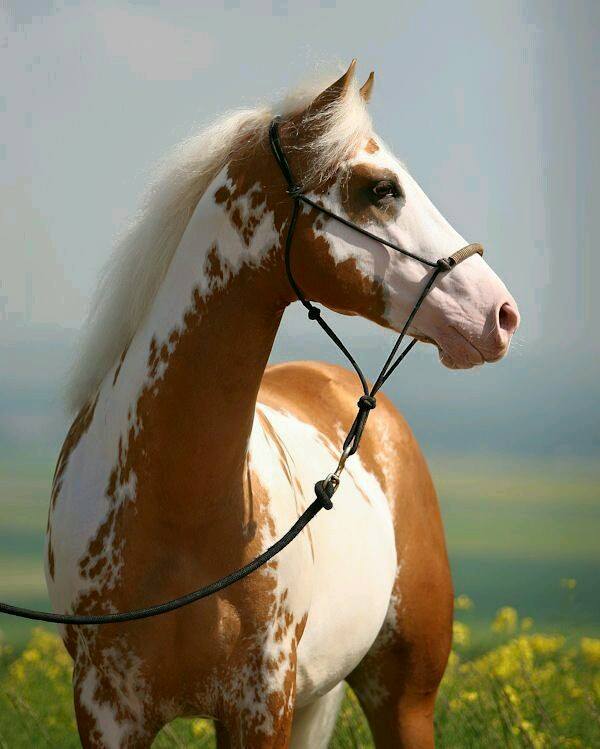
EXTREMELY CALM -- When surprised, they jump a step or two, then turn to face whatever startled them. Once they see the object, they'll sniff it and calm down. Because they're so calm, I've seen this happen only a few times, but the reaction is always the same.
Curlies make good pack animals for mountain hunters as they do not become upset at the smell of blood. They are quite willing to pack out fresh kills without a fuss.
Curlies do not panic when they are trapped. If they get caught in a fence, they wait for someone to help them.
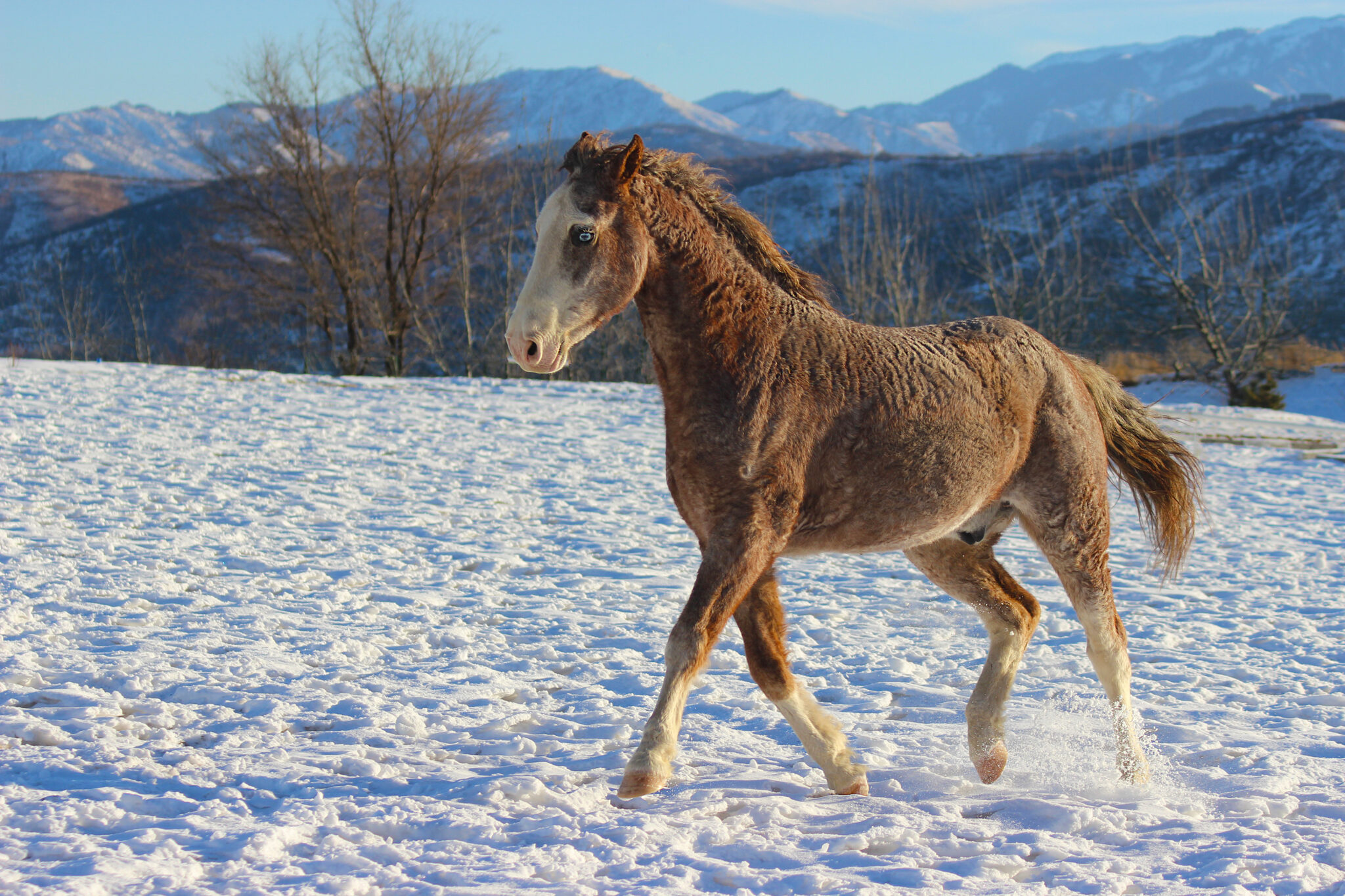 NO BLANKETS OR STALLS NEEDED
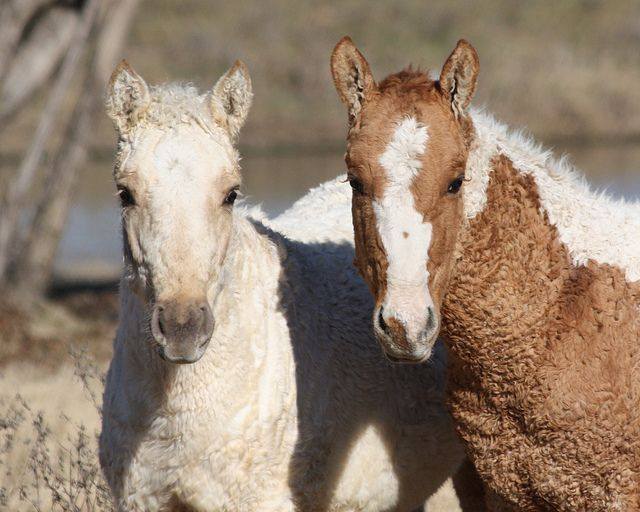
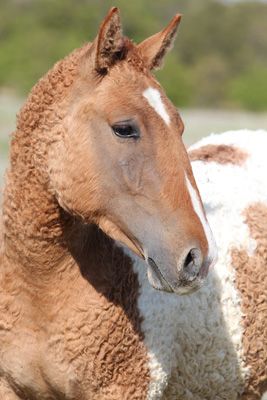
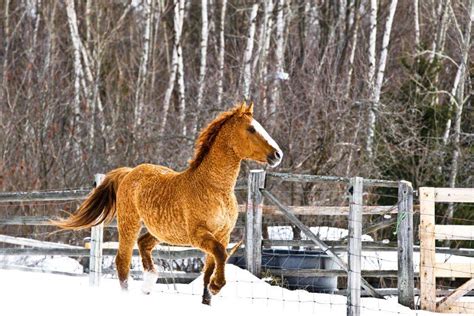
 -- Because of all their adaptations to cold climates, Curlies do not need to be kept in stalls at night or taken indoors even during the coldest part of the winter. People have raised Curlies in Alaska and left them outside in winter, and the horses were just fine. With their long curly coats and extra layer of fat, there's no need to add a blanket. In extremely cold climates, the snow and ice forms a crust on the Curly's back and provides added insulation. We have never put our horses in stalls at night, but a 3-sided shed is available if they choose to use it. They live outdoors year 'round and do fine in all seasons.
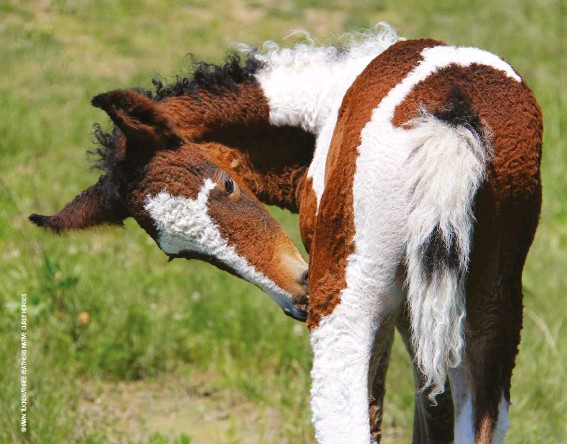 A HIGHER RED AND WHITE BLOOD CELL COUNT
 -- The University of California at Davis did a blood study of Curlies in the 1980s and found they possess a higher red and white blood cell count than other breeds.
This helps to explain why Curlies heal so quickly from cuts and scrapes. They also have a strong immune system that enables them to ward off most diseases as long as they are well fed and happy.
STRONG HOOVES -- Curlies generally have strong hooves and usually do not get hoof problems. You generally will not need to shoe a Curly unless you're riding constantly over rocky terrain or on concrete. Under normal conditions, Curlies do just fine with “bare” feet.
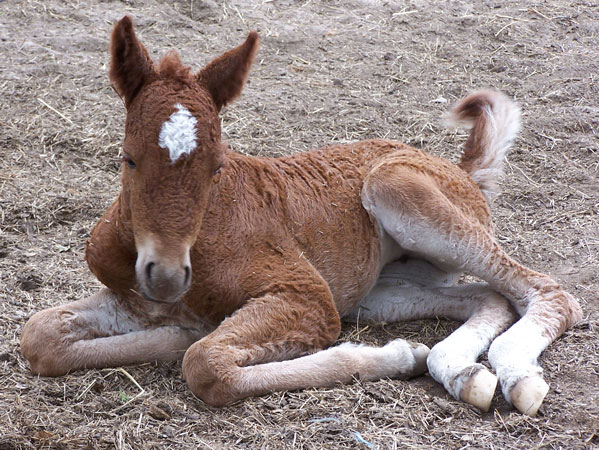
A SHORTER BACK -- Curlies have only 5 lumbar vertebrae in their backs, making them slightly shorter in length than other breeds. This, however, doesn't impede their ability to carry riders or do work in harness. In fact, having a shorter back gives them a smoother gait.
A STOCKY BUILD -- Curlies have a thicker chest, shorter and thicker neck, and thicker legs than many other breeds. They are similar to the old-style Morgan in this regard. They are strong for their size and do well in harness.
 THEY EAT LITTLE OR NO GRAIN
 -- Curlies adapted on sparse scrub grass in harsh climates. Their stomachs are able to extract plenty of nourishment from grass hay, even when working hard. Grain is usually too rich in protein for them and can make them sick or even kill them if they are given too much. We know of people who rode in the mountains every day for 20-30 miles and fed their Curlies nothing but grass hay. Curlies are known to have pulled a sleigh 60 miles through the snow on nothing more than a flake of hay and water.
HIGHER INTELLIGENCE -- Curlies are very smart. They learn fast and do not need a heavy hand to make them attempt maneuvers. They respond to and thrive on gentle and kind training.